
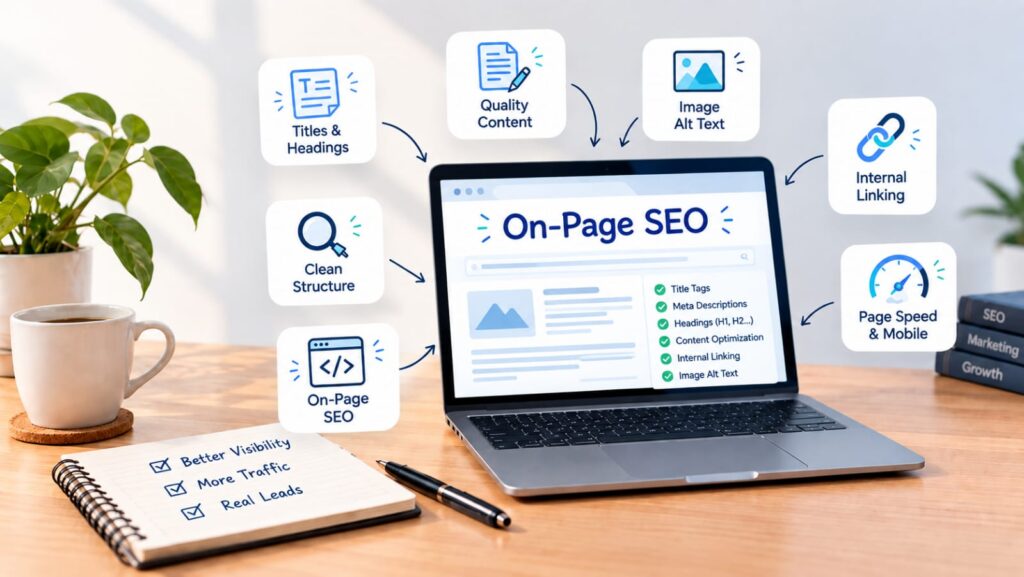
A lot of business owners go through the same thing. They spend weeks, sometimes months, building their website picking colors, writing the words, adding photos. Then, after all that work, the website just sits there quietly, and nobody visits it. Page five of Google. Nobody clicks. Nobody calls. The frustrating part? The business is usually fine. Good product, decent service, real value. Your website may look good, but people may not find it on Google. On-page SEO helps with this. It is very simple when you know the basics.
What Is On-Page SEO?
On-page SEO means making your website easy to understand. This is for Google, and also for the people who visit your site. It includes things like your title, your writing, your pictures, and your links. This is one of the first things to fix when doing SEO. You can run ads and post on social media, but if your website is slow or difficult to understand, people may leave the site.
Titles and Headings
Let’s start with titles and headings. Many websites make mistakes here. The title should clearly tell what the page is about. Not clever. Not vague. Just clear. Google uses this to figure out what you’re offering, and so does the person scrolling through search results deciding whether to click you or the business next to you.Headings work the same way they break your page into sections people can actually scan. Nobody reads a giant wall of text anymore. They skim, they jump around, they look for the part that answers their question. Good headings make that possible.
Content Quality
Content is also important. Some business owners use the same keyword many times because they think it will help website rank higher on Google. But it doesn’t. Not anymore. Google’s gotten much better at understanding actual language, actual intent. What works now is writing something that genuinely answers what your audience typed into that search bar. If someone’s looking for branding help or advice on business growth, and your page gives them something real instead of filler, they’ll stick around. And sticking around is usually the first step toward turning a random visitor into an actual lead.
Linking Your Pages
Another thing people often forget is linking your pages. If your blog talks about your services but doesn’t link to the service page, people may not find it. Your homepage should also link to important pages on your website. A website that flows logically one page leading naturally into the next helps visitors move around without getting lost, and it helps Google figure out which pages on your site actually matter. A site with no internal structure just feels like a maze. And mazes don’t rank well, no matter how nice the individual rooms look.
Image Alt Text
Small stuff matters too. Alt text on images, for one that little description tag most people skip entirely. It helps search engines understand images, sure, but it also matters for accessibility, for people using screen readers. It’s a two-minute task most sites just never bother doing.
Page Speed and Mobile Design
And then there’s speed. Mobile design. Not glamorous topics, I know, but they’re still part of the on-page picture. Most people are browsing from their phone right now, probably while doing three other things. If your site takes six seconds to load or looks broken on a small screen, they’re gone before they even read your headline. That’s not a maybe that’s just how people behave online today.
Start Small, One Page at a Time
None of this has to happen overnight, by the way. If you’re running your website solo, without some big marketing department behind you, just pick one page. Start there.
- Fix the title
- Clean up the headings
- Rewrite the content so it’s actually useful instead of just filler text nobody asked for
- Add alt text in your images
Make small changes in your website one page at a time. No need to change everything at once.
Why On-Page SEO Is a Long-Term Investment
Here’s the part I think is most underrated about on-page SEO: it doesn’t stop working the moment you stop paying attention to it. Ads and paid campaigns bring in traffic while the money’s flowing, then dry up the second you pause the budget. On-page SEO is different. When you do it properly, it can help your website get visitors from Google over time. It becomes a useful part of your website. It also ties into everything else you’re doing. Solid on-page work keeps your branding consistent across every page someone visits. It gives your social media and advertising campaigns an actual place to send people that doesn’t fall apart the second they click through. And if you ever sit down with your analytics, you’ll usually notice the pattern pretty quickly the pages that got proper attention hold their rankings longer, pull in steadier traffic, and generate more real leads than the ones nobody ever touched.
My Approach
I work with small businesses who are dealing with exactly this decent online presence, no real SEO strategy tying it together. As the Best SEO Expert in Cherpulassery, my approach has stayed pretty consistent over time: fix what’s broken first, keep the content honest, and let growth build naturally instead of chasing shortcuts that stop working after a month or two.
If you take one thing from this, let it be this on-page SEO isn’t about outsmarting an algorithm. It’s about making your website make sense. Yes, that helps with Google. But really, it’s for the actual people who land on your page, looking for something real.